The Real Reason Freelance Clients Say Your Rates Are Too High
When a client says your rate is too high, the instinct is to lower your price. But pricing objections are rarely about the number. Learn how to diagnose the real cause and fix it.


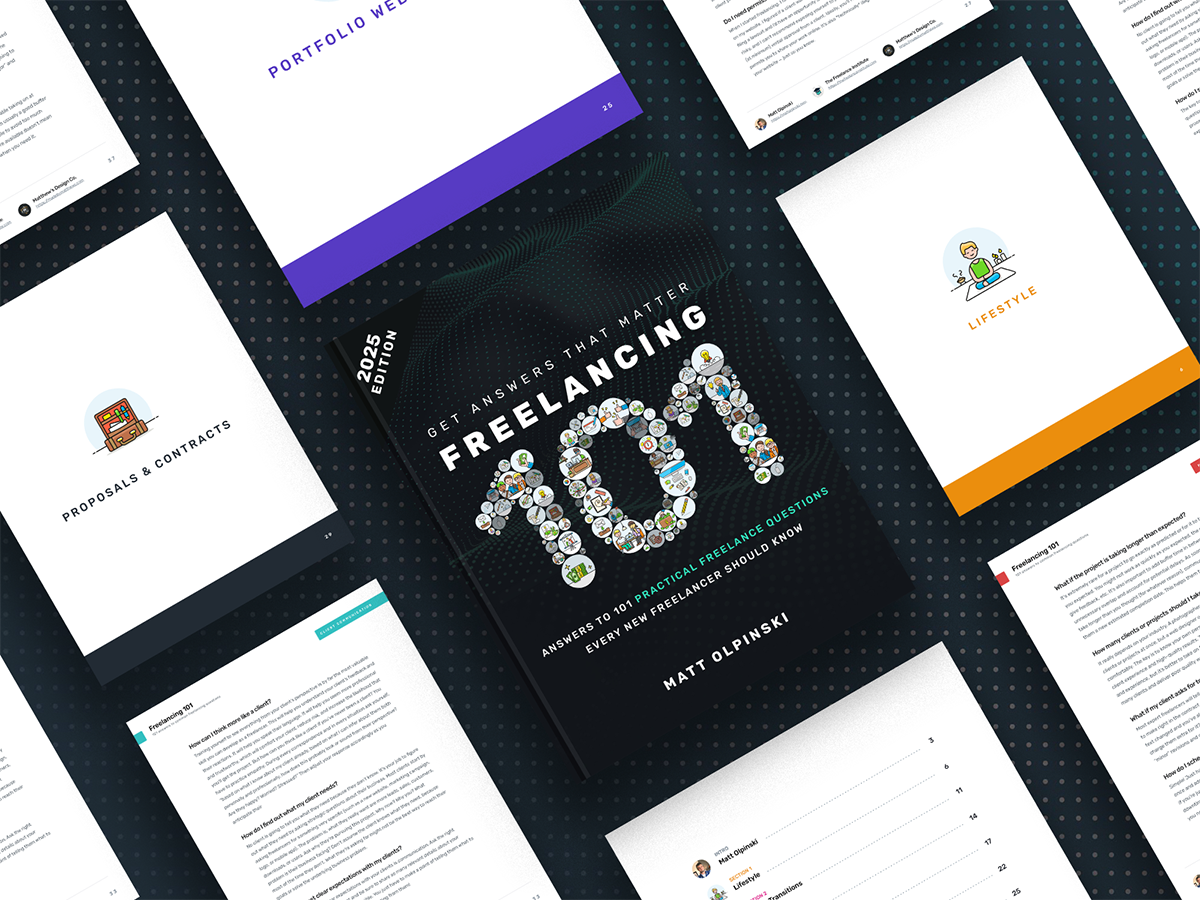
New to freelancing? Start here with my FREE 100+ tip guide.
Price your services, find better clients, and avoid beginner mistakes all in one clear, practical book.
When a client says your rate is too high, it feels personal. You put real thought into that number and someone just told you it isn’t worth it. Few moments in your early freelancing career will create more doubt than a pricing objection from a potential client. They tell you the project is out of their budget and suddenly you’re questioning everything:
Are my rates too high? Will the market support what I want to charge? Should I lower my price just to close the deal?
That emotional reaction is understandable, but it’s also where most freelancers make their first mistake. When a client pushes back on your price, they aren’t just reacting to a number that’s too high. They’re reacting to:
- an outcome you didn’t clearly define
- a problem too small to justify the investment
- a process that didn’t give them enough confidence to say yes
Those problems won’t be solved by lowering your rate or making pricing concessions just to close the deal. Instead, you need to establish a discovery process that prevents them from happening in the first place. And that starts earlier in the client relationship than most freelancers realize.
Pricing Objections Signal Gaps in Communication
When a client evaluates the cost of a project or your rate, they don’t consider it isolation. In the clients mind, they’re comparing it to what they expect to get, how important the project feels to their business, and how confident they are you can deliver. Any previous experience they’ve had on similar projects factors in too. Price is always relative to those things. When any one of them is unclear or misaligned, the price feels wrong regardless of the actual numbers.
That’s why a $5,000 project can feel expensive to one client and like an obvious investment to another. It rarely has anything to do with the $5,000. This is also why two freelancers with identical rates can have completely different experiences with pricing objections. One might lose projects consistently at $8,000 while another closes them regularly at $12,000.
What matters is how effectively you can define the outcome, connect the project to a real business problem, and establish trust before the proposal is ever sent. Those are the variables that make the difference and they’re strategic advantages you can give yourself with a clear process and a little practice.
So before you adjust your rate, it’s worth considering what the objection is actually signaling to you:
- Did the client understand what they were getting and what would change for their business after the project?
- Was the price proportionate to the size of the problem they described?
- Did they feel confident enough in your process and track record to justify the investment?
If the honest answer to any of those questions is no, that’s more useful than a simple rejection. You’ve actually learned precisely where the breakdown happened and you can use that to improve your discovery process.
The Perception Gap
The most common source of pricing objections is also the most preventable. When a client doesn’t fully understand how the project will benefit their business, your price has nothing to anchor against. And in the absence of a clear outcome, clients do what people naturally do — compare it to the cheapest alternative they can find.
This gap in perception happens when freelancers describe their work in terms of deliverables and tasks rather than outcomes and results. “I’ll redesign your website” is a task. “I’ll rebuild your site so it converts visitors into leads more effectively” is an outcome. The second version gives the client tangible value to measure the price against. The first version gives them a reason to shop around.
That adjustment in communication called positioning.
You can’t close the perception gap by competing on price either. There will always be someone willing to charge less, and the clients who hire based on price alone are rarely the ones worth working for. The differentiators that actually justify a higher rate are faster turnaround, a stronger aesthetic sensibility, clearer communication, deeper industry experience, and a more structured process. But they only carry weight when the client already understands what a better result looks like for their business.
So if your freelance clients are struggling to see the value of your work, you need to improve your discovery process. Most of the time, clients will start by telling you what they need. Your job is to ask business-focused questions to learn about their underlying needs in addition to learning about the scope of work. That will help you connect the project to a real business problem.
Then start discussing possible solutions and pricing. If you wait too long, the client’s expectations have already formed. And if those expectations were shaped by a vague initial conversation, no amount of polished proposal writing will fix the disconnect.
Discuss Pricing Before You Write the Proposal
Talking about pricing as early as possible can feel uncomfortable if you’re a new freelancer. But one way to make it easier is to set general expectations on your website and in your project intake form. Then once you understand the scope and goals of the project, give the client a ballpark before you write anything formal. Something like:
✨ Freelance Insight“For projects like this, I typically charge somewhere in the range of $8,000 to $15,000 depending on scope. Based on what you’ve described so far, I’d expect to land somewhere in there.”
That one sentence filters misaligned budgets before you invest hours in meetings, phone calls, and proposal writing. And more importantly, it anchors your eventual price against a number the client already had time to process.
Share your ballpark pricing early enough that your eventual number feels like a confirmation rather than a surprise. When a client feels surprised by your price, they’ll almost always push back on it.
The Alignment Gap
Even when the outcome is clear to your freelance client, the cost of the project can still feel wrong. This typically happens when the size of the price doesn’t match the size of the problem being solved. A $10,000 solution to a $3,000 problem will always feel expensive regardless of how well you’ve communicated the outcome. The math just doesn’t work in the client’s head.
The reverse is also true. If you quote far less than the client expected, it can indicate you don’t have the understanding or experience needed for the job.
This is the alignment gap, and it usually has one of two causes. Either the client’s problem is genuinely smaller than the price tier you’re operating in, or you haven’t surfaced the full size of the problem during discovery. Both have solutions, but they require different responses.
Surface the Full Size of the Problem
If the problem is genuinely small, you have a positioning decision to make. You can adjust your scope to fit the problem, refer the client to someone better suited for smaller projects, or move on. What you shouldn’t do is force a high-value price onto a low-stakes project, because it will feel misaligned to the client for the simple reason that it is.
If the problem is larger than the client is articulating, the solution is a better discovery process. Ask questions that help the client quantify what’s at stake:
- What does this problem cost them right now?
- How does success look in revenue or growth terms?
- What happens if the problem isn’t addressed?
- How long have they been dealing with the problem?
- What’s making this a priority for them right now?
Those questions not only help you understand the project, they also help the client understand why investing in a real solution is justified. When a client can say “this problem is costing us $50,000 a year,” a $12,000 project that solves it stops feeling expensive and starts feeling like an obvious decision.
The alignment gap is also influenced by who you’re talking to. A manager with a $5,000 discretionary budget will react differently to your price than an executive who owns the P&L, so if you’re consistently running into budget objections, make sure you’re having conversation with the key decision-makers.
The Risk Gap
The last reason freelance clients usually push back on price has nothing to do with the outcome or the problem size. It all comes down to risk. The higher the price, the more the client has to lose if things don’t go well. And when a client isn’t confident in what they’re buying or who they’re buying it from, that perceived risk becomes the biggest part of their decision.
This is the risk gap, and your ability to mitigate risk is often the difference between struggling to close small projects and closing large ones with almost no pushback.
✨ Freelance InsightYour ability to mitigate risk is often the difference between struggling to close small projects and closing large ones with almost no pushback.
Early in my career, I had clients hesitate to pay $2,000 project fees. The work wasn’t much different from projects I closed later at significantly higher prices — and sometimes those more valuable projects were paid in full upfront by a brand new client.
My skills hadn’t transformed overnight. What changed was how I showed up before the proposal. I walked clients through the process more clearly, connected my past work to their specific situation, and left much less to their imagination about what working with me would actually be like. When those things were in place, my pricing stopped becoming an objection.
 Best Seller!
Clarity Matters More Than Portfolio Quality
Have you ever seen a really successful freelancer or consultant’s work and thought to yourself, “How are they charging so much? My work is better than that!” Most designers assume a pricing objection means they need to upgrade their portfolio. While that can sometimes be the case, a clearer process will usually outperform portfolio improvements.
Walk the client through your process before you send the proposal. Explain how decisions get made, when they’ll see work, and what checkpoints exist along the way. Show them that working with you is a structured experience rather than an open-ended commitment with an uncertain outcome. When clients understand the process, the price starts feeling like a defined investment rather than a leap of faith.
Specificity matters here too. Showing a client a project that closely resembles their own (with a clear before and after) does more to reduce perceived risk than a general portfolio of impressive work. If you do marketing websites, your portfolio should showcase marketing websites — not logos, posters, and apps. The client isn’t asking whether you’re talented, they’re asking whether you’ve solved this problem before and whether you can solve it for them too.
Pro Tip: Always collect client testimonials from successful projects and showcase them on your portfolio website. This will help you instill confident early on and generate more leads.
You can further reinforce this through early pricing conversations as well. When the client has already heard a ballpark number and had time to digest it, your proposal confirms something they were already expecting instead of coming as a surprise when you’re trying to close the deal.
Why Discounting Feels Productive But Usually Isn’t
When a client says your price is too high, lowering it can feel like the obvious move. It resolves the immediate tension you’re feeling, but it almost always signals a lack of confidence and experience to the client. It also brings into question how you value your own work and tells the client the original number was negotiable.
Even if it temporarily keeps the conversation going, discounting a project at the clients request will almost always result in a lost sale or a poor project experience.
And if you offer a discount to close a project where the outcome was never clearly defined, you’ve accepted a lower price for a project that was risky from the start. The same scope creep, misaligned expectations, and communication friction that caused the objection will still be there, and you’ll just be dealing with them for less money.
Always Get Something In Return for a Discount
All that said, price adjustments aren’t always wrong. If you’ve done the diagnostic work and you genuinely determine that your rate is above market for your current positioning, or that a particular project doesn’t justify your standard engagement size, adjusting makes sense. The difference is that you’re adjusting based on evidence rather than anxiety.
You can also experiment with offering a discount in exchange for something else such as full upfront payment. I offer every client a 10% discount for full upfront payment and I’ve been shocked at how often clients choose to do so. You can also negotiate timelines, deliverables, or other parts of the project scope.
As a new freelancer, it can be tempting to adjust your price or rates based on client objections. But before you decide you have a pricing problem, make sure you’ve got a clear process in place, ask the right questions, and discounting the scope of work — not your rates.
Diagnose Before You Adjust: A Practical Framework
When you lose a project to a pricing objection, the best thing you can do is take time to reflect and learn by asking yourself some honest questions:
- Was the outcome clearly defined and connected to business value? Did the client understand exactly what would change for their business after the project was complete? Could they articulate the result in their own words? If not, the perception gap was likely a factor.
- Did the price align with the size and urgency of the problem? Did you surface enough about the business context to understand what was genuinely at stake? Was the problem large enough, and urgent enough, to justify the investment? If the stakes were unclear or undersized, the alignment gap was likely a factor.
- Did the client feel confident in the process and the likely result? Were they guided through how you work before you sent the proposal? Did they have enough specific proof that you’ve solved similar problems before? If the process was opaque and the proof was generic, the risk gap was likely a factor.
Simply getting comfortable discussing pricing earlier on in the process can addresses all three gaps at once. As soon as you have enough details from the client, proactively share a ballpark range and anchor it to the business goals the client described. When you confirm they’re comfortable in that range before you invest time writing a formal proposal, the proposal becomes a confirmation rather than a first impression.
If the answers to these questions honestly point to your rate being too high, then make an adjustment. But in most cases, this diagnostic step will point to a gap you can close through a better discovery process.
Best Seller!
Structure Provides Pricing Confidence
The advice you’ll hear most often about pricing is to charge what you’re worth and own it. While that’s not bad advice, it skips the part that actually makes confidence possible. And it doesn’t help new freelancers who don’t have much experience with estimating the cost of a freelance project.
It’s not just about experience though. Pricing confidence comes from having a process that consistently produces clear outcomes, aligned problem framing, and low client risk. When those three things are in place, your price makes sense to the client before they even see it.
Most pricing objections are structural problems wearing an emotional disguise. What feels like rejection is really feedback about something that happened earlier in the process — a vague discovery conversation, a proposal that introduced a number without context, a portfolio that showed work but didn’t demonstrate relevance. Each of those things can be fixed without changing your rate.
Start by asking the right questions, practice talking about pricing early on, and the confidence will follow.

You Might Also Like These

A Beginner’s Guide to Value-Based Pricing
A value-based project is simply a fixed-fee project where the price is determined by the value of the outcome to the clients business – not the estimated time it will take to complete.

How to Estimate the Cost of a Freelance Project
Estimating the cost of a project is one of the most important requirements of freelancing. You'll need to calculate hours, set a rate, and present a proposal to the client.

Pricing & Scope Management (A Beginner’s Guide to Setting Rates & Boundaries)
Protect your time and income by learning to address scope creep in your freelance projects with smart pricing strategies.